
Explore expert advice, formulation trends, and private label cosmetics guides from COLORCOS Thailand.
Choosing a Private Label Matte Lipstick supplier is not just a packaging decision. The formula must feel comfortable, apply evenly, and hold its color through real wear. A smooth swipe on a sample card is not enough. Test it on lips, under daylight, and after a few hours.
Makeup artist and cosmetics founder Bobbi Brown once said, “I believe all women are pretty without makeup—but with the right makeup can be pretty powerful.” That idea makes product quality personal. A matte lipstick should support confidence, not leave lips feeling tight or looking patchy. Small details matter: pigment payoff, scent, cap fit, shade consistency, and how cleanly the bullet retracts. Some are easy to overlook.
This guide compares seven suppliers for brands exploring private-label production in 2026. It considers formulation options, customization, minimum order quantities, packaging choices, communication, and sample evaluation. Supplier claims can sound similar. Evidence matters more. Ask for current product specifications, ingredient information, and relevant quality documentation, then compare samples side by side. Check how a shade looks across different lighting and skin tones. A supplier may be a strong fit on paper, yet still miss your texture or finish expectations. That is worth admitting early. Use this shortlist as a starting point—not a substitute for careful testing and direct supplier conversations.
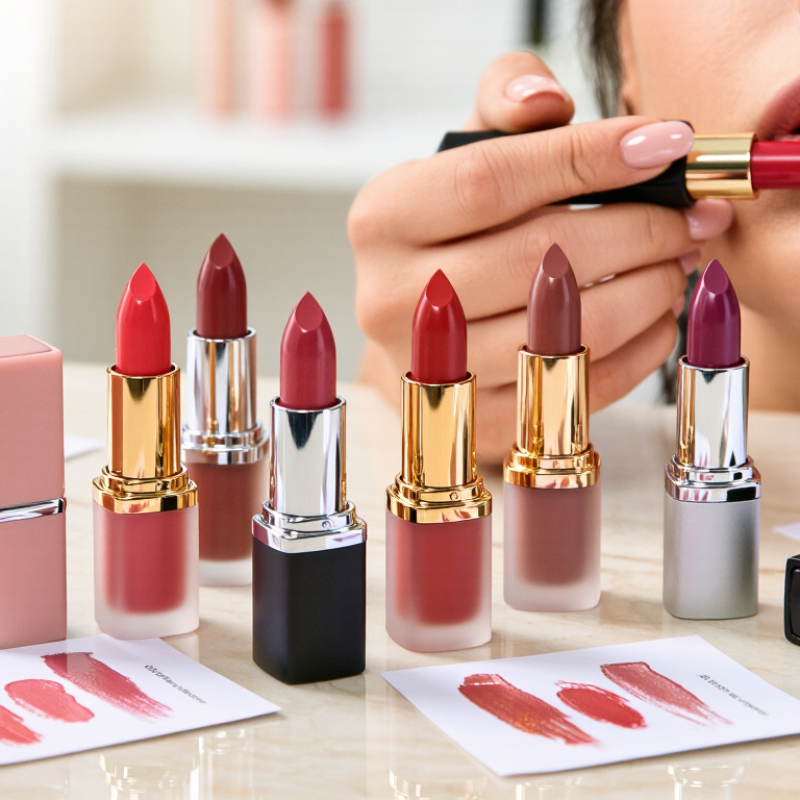
Private label matte lipstick lets a retailer offer a ready-made or customized formula under its own identity. A supplier may provide shades, packaging, and production support, while the seller shapes the product’s positioning and customer experience. Matte formulas typically dry down with little surface shine, making pigment and lip lines more noticeable. They can also feel tight on dry lips. That trade-off matters.
The market includes everyday neutrals, deeper colors, and seasonal shades, but success is not simply about offering more options. Buyers value consistent color payoff, comfortable wear, clear ingredient information, and packaging that can withstand a handbag or warm delivery route. A swipe on a white card reveals little about how a shade looks on different skin tones. Test it on lips. Check the color and comfort after several hours, too.
Before approving a private-label project, compare sample consistency, minimum order quantities, lead times, and customization options. Ask how production batches are checked and whether the formula can vary from the approved sample. Review product claims carefully; “long-wear” should reflect observed wear, not just a product brief. One easy-to-miss issue is packaging: a loose cap can dry out the bullet or create a mess. Small details count. Testing every shade, however, can strain time and budget, so prioritization may not be perfect.
Choosing a private-label matte lipstick supplier in 2026 takes more than comparing unit prices. PLMA reported that U.S. store-brand sales reached $236.3 billion in 2023, up 4.7% year over year. That scale signals opportunity, but also makes consistent quality and reliable replenishment essential. Ask suppliers for pigment-dispersion records, shade tolerances between batches, and stability-test results. Test the lipstick on lips, not only on a hand: does it drag, crack, feather, or highlight dry patches? Small tests reveal much.
Request samples from at least two production lots, rather than relying on one polished development sample. Compare color payoff on bare and primed lips, then check wear after several hours and a meal. A quick swatch may feel comfortable, while longer wear can expose tightness. Check the formula in its final tube; wiper fit and packaging compatibility can change how much product comes out. McKinsey’s 2023 beauty-market analysis projected roughly 6% annual growth through 2027, making scalable production worth assessing alongside formula quality. Verify capacity claims. Ask for realistic lead times, minimum order quantities, and contingency plans for component delays. A sample can mislead. Keep retained samples and agree on written acceptance criteria before production.
| Supplier type | Best suited for | Indicative MOQ planning range | Indicative production lead time | Evidence to request | Main evaluation risk |
|---|---|---|---|---|---|
| Stock-formula private label manufacturer | Launching a small range using an existing matte formula and standard packaging. | About 500–1,000 units per shade; confirm whether MOQ applies per shade, order, or production run. | About 6–10 weeks after shade, packaging, and artwork approval. | Current ingredient list, shade samples, batch records, stability information, and written MOQ terms. | Limited control over formula, finish, shade matching, and packaging choices. |
| Custom-shade manufacturer | Brands that need differentiated colors while using a proven base formula. | Often around 1,000–3,000 units per custom shade; request a sample and shade-approval process. | About 8–12 weeks after color approval; sampling and revisions can add time. | Color-matching method, approved reference standard, sample sign-off procedure, and batch-to-batch controls. | Color can appear different across batches, lighting conditions, and skin tones. |
| Custom-formula development manufacturer | Brands seeking a distinctive wear profile, pigment level, texture, or ingredient direction. | Common planning range: about 3,000–5,000 units per formula or shade; development fees may be separate. | Typically 12–20 weeks or longer, including development, testing, and production scheduling. | Formula ownership terms, development milestones, stability and compatibility plans, and change-control procedures. | Longer development, higher upfront costs, and unclear ownership or exclusivity terms. |
| Packaging-integrated turnkey manufacturer | Buyers wanting formula, filling, component sourcing, and assembly coordinated by one supplier. | Often around 1,000–3,000 units per SKU for standard components; custom components can require higher commitments. | About 10–16 weeks after all components and artwork are approved; custom packaging may extend this. | Component specifications, packaging compatibility results, decoration proofs, and responsibility for defects at each stage. | Component delays or unclear accountability between packaging and filling operations. |
| Large-scale color cosmetics manufacturer | Established brands planning higher volumes, repeat orders, or multiple markets. | Frequently 5,000 units or more per SKU; exact thresholds depend on equipment and production planning. | About 12–20 weeks after approvals, with capacity and order scheduling affecting timing. | Quality-management documentation, audit access, capacity confirmation, traceability, and corrective-action records. | Higher volume commitments and less flexibility for small or frequently changing orders. |
| Regulatory-support-focused manufacturer | Brands that need structured documentation and support for defined destination markets. | Varies widely; compare the MOQ for the specific formula, market, and packaging configuration. | About 8–16 weeks after product and market requirements are confirmed; regulatory review can add time. | Market-specific ingredient and product documentation, labeling support scope, safety assessment arrangements, and responsible-party responsibilities. | “Regulatory support” may not mean the supplier assumes the brand owner’s legal obligations. |
| Flexible small-batch manufacturer | Market testing, limited releases, or early-stage brands prioritizing smaller initial orders. | Potentially 300–1,000 units per SKU when available; small-batch pricing and shade options may be limited. | About 6–12 weeks after approvals, subject to batch scheduling and component availability. | Written batch-size limits, unit pricing at reorder volumes, batch traceability, and the same quality records offered for larger runs. | Higher unit cost, limited production capacity, and possible inconsistency if later batches use different inputs. |
Evaluation note: Treat MOQ and lead-time figures as initial planning estimates only. Request a dated quotation and verify product safety, ingredient and labeling requirements for each intended sales market. Ask for relevant quality and manufacturing records, stability and packaging-compatibility evidence, sample approval terms, defect remedies, and written ownership terms for any custom formula or design.
Choosing a private label matte lipstick supplier takes more than comparing sample shades. Check pigment consistency, wear tests, ingredient documentation, minimum order quantities, and production lead times. Ask for samples in your intended packaging; a formula may feel smooth in a tube but drag on dry lips.
Grand View Research valued the global lipstick market at USD 17.49 billion in 2023 and projected a 5.9% compound annual growth rate from 2024 to 2030. That growth makes reliable quality control and clear supplier communication especially important.
Tips: Request batch-level quality records and test samples in different temperatures. Confirm whether quoted costs include filling, packaging, and freight. Small details matter.
A useful shortlist of seven suppliers should include manufacturers with distinct strengths: flexible low-volume production, broad shade development, custom packaging, rapid sampling, specialist matte formulas, strong quality systems, and dependable scaling. Verify each claim directly. Compare the same shade across samples, then note transfer, cracking, and comfort after several hours. One limitation: a short wear test cannot predict every customer’s experience. Still, it beats choosing by a color card alone.
When comparing private label matte lipstick suppliers, look beyond a polished product catalog. Ask what they can adjust: pigment payoff, dry-down time, scent, and how the lipstick feels after several hours. A capable supplier should explain its sampling process and what can realistically change between revisions. Request samples in the same packaging you plan to use; a formula can feel different when applied from another tube.
Minimum order quantities need careful reading. Is the minimum per shade, per formula, or for the full order? Does custom packaging raise it? Get the answer in writing, along with costs for samples, artwork setup, and repeat production. Small runs matter. They can help test demand, but some suppliers charge more per unit or limit customization at lower volumes. That trade-off is easy to miss.
Lead times should be compared by stage, not as one broad estimate. Ask how long sampling, formula approval, packaging preparation, production, and shipping each take. Confirm when the clock starts and what could cause delays, such as a packaging change or a busy production schedule. Ask again. A supplier that gives clear updates and flags problems early may be more dependable than one promising an unusually quick turnaround. I would still build in extra time; estimates can slip, even with a good plan.
A matte lipstick can look flawless in a sample and still fail after six hours of wear. Check the formula on several skin tones and under different lighting. Ask suppliers for shade-specific stability results, batch records, and test methods—not just a polished product sheet. McKinsey’s 2024 beauty report projected the global beauty market could reach about $590 billion by 2028. That growth makes supplier claims easy to find, but careful verification still takes time.
Request evidence of quality controls, including documented manufacturing procedures aligned with ISO 22716 cosmetics good manufacturing practices. Review ingredient specifications, color consistency limits, and packaging compatibility tests. A lipstick bullet should not sweat, crack, or pull away from its tube after heat exposure. Ask for recent test reports tied to the exact formula and packaging you plan to order. Then verify the supplier’s facility details and speak with a customer reference, if available.
Do not rely on a single sample. Order a pilot batch and compare units from different cartons for shade, scent, payoff, and cap fit. Record defects with photos and agree on written acceptance criteria before production. I would also ask what happens when a batch misses specification. It is an awkward question, but silence is not reassurance. Some checks still feel imperfect; supplier documents cannot fully predict how customers will wear a shade.
Ask whether they can adjust pigment payoff, dry-down time, scent, and wear feel. Request samples in your intended packaging. The tube can change application.
Confirm whether the minimum applies per shade, formula, or full order. Ask if custom packaging raises it. Get sample and setup costs in writing. Small runs help.
Ask for separate estimates for sampling, formula approval, packaging, production, and shipping. Confirm when timing starts and what might delay each stage. Add extra time.
Test it on several skin tones and under different lighting. Check the shade, scent, payoff, and feel after several hours. One sample is not enough.
Request ingredient specifications, batch records, test methods, and documented manufacturing procedures. Look for recent reports covering your exact formula and packaging.
Ask for heat-exposure test results. Check that the lipstick does not sweat, crack, or pull away from its tube. Inspect the cap fit too.
Compare units from different cartons for shade, scent, and payoff. Photograph defects and agree on written acceptance criteria before production. I would not skip this.
Ask how the supplier handles products that miss specifications. Agree on the response in writing. It can feel awkward, but silence proves little.
This guide explores the growing market for Private Label Matte Lipstick and the factors that shape a successful product, from finish and wear to formula options and packaging. It explains how to assess suppliers in 2026 by reviewing product quality, customization capabilities, communication, production capacity, and quality-control practices. The guide also introduces seven supplier options and offers a practical framework for comparing their capabilities, minimum order quantities, and estimated lead times.
Choosing a supplier involves more than comparing prices. Brands should clarify their product requirements, request relevant samples, confirm what customization is available, and ask for written details about costs, timelines, and quality checks. Before committing to an order, verify the supplier’s business information and production process, and make sure expectations are clearly documented. These steps can help reduce avoidable surprises and support a more reliable path from product concept to launch.