
Industry Knowledge & News

Cosmetics Insights & Blog

Explore expert advice, formulation trends, and private label cosmetics guides from COLORCOS Thailand.

0%

Choosing a color cosmetics manufacturer is no longer a simple sourcing task. It can determine product safety, launch speed, brand credibility, and customer loyalty. A lipstick may look effortless on a retail shelf. Behind it, however, are pigment controls, shade consistency, stability testing, packaging compatibility, and documented quality systems.

The opportunity remains significant. McKinsey’s The Beauty Market in 2023 projected the global beauty industry could reach approximately $580 billion by 2027, with online channels continuing to expand. Circana also reported resilient prestige beauty performance in 2024, while makeup remained an important contributor in several major markets. These figures support continued investment in Color Cosmetics Manufacturing. They do not guarantee success.

A reliable manufacturer should show more than attractive samples. Ask about ISO 22716-based practices, batch traceability, microbiological testing, ingredient documentation, and regulatory support for target markets. Review how the factory handles shade matching under different lighting. Request evidence from production batches, not only laboratory prototypes. A practical audit should examine filling lines, retained samples, complaint procedures, and supplier qualification records.

Small details matter. Does the mascara brush fit consistently? Does the foundation separate after heat exposure? Can the supplier repeat a color six months later? These questions reveal operational maturity. Still, no checklist is perfect. Reports use different methodologies, and market forecasts can shift quickly. Your own product category, claims, price point, and consumer feedback must remain central.

The following ten tips provide a structured way to assess manufacturers, reduce avoidable risk, and build a more dependable cosmetics partnership.
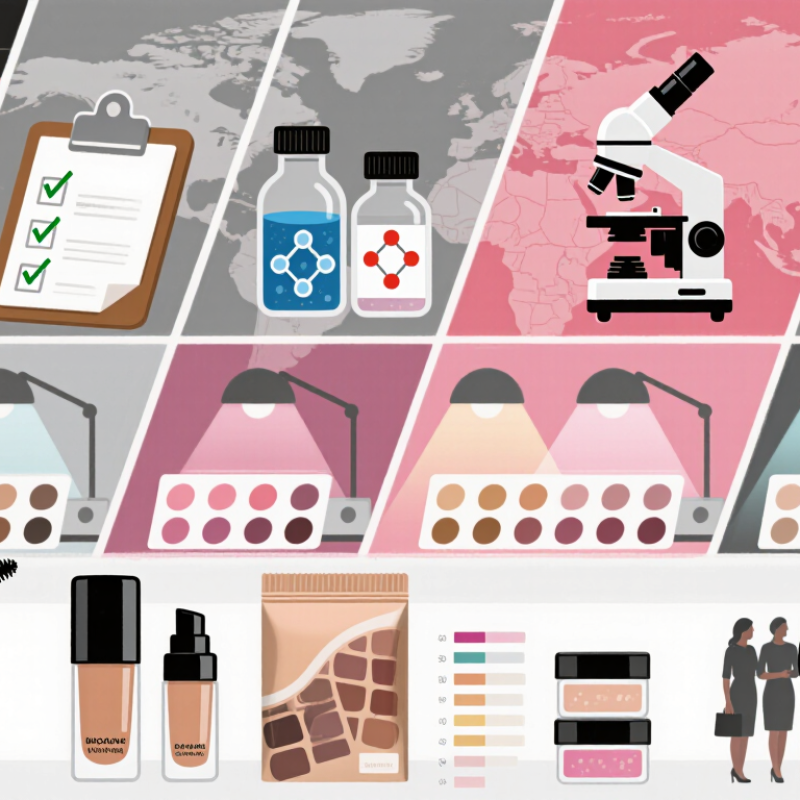
10 Tips for Choosing a Color Cosmetics Manufacturer

Define Your Product Concept and Manufacturing Requirements

Define Your Product Concept and Manufacturing Requirements

A clear product concept prevents expensive revisions later. Define the finish, coverage, shade range, packaging format, target price, and expected shelf life. A matte liquid foundation needs different filling equipment than a pressed powder. Specify texture, pigment load, fragrance policy, and application method before requesting quotations.

Market evidence supports careful planning. McKinsey’s 2023 beauty report projects the global beauty market could approach 580 billion dollars by 2027, growing about 6% annually. Circana reported that U.S. prestige makeup sales increased 15% in 2023. Demand is strong, but crowded categories punish vague product briefs. Small details matter.

In factory sampling, a shade can match under studio lights but fail near a window. Test it in both settings. Confirm color consistency across pilot and production batches. Request documentation for raw-material specifications, microbial testing, stability testing, and packaging compatibility. ISO 22716 provides widely recognized guidance for cosmetic good manufacturing practices. Your manufacturer should explain how its quality system follows applicable requirements in your target markets.

Do not overpromise at the briefing stage. A “clean,” long-wear, water-resistant formula may create difficult trade-offs in cost, stability, and testing. Leave room for reformulation. A useful requirement is measurable: eight-hour wear, defined transfer limits, or a specific viscosity range. If you cannot measure it, it may not yet be a manufacturing requirement.

10 Tips for Choosing a Color Cosmetics Manufacturer - Define Your Product Concept and Manufacturing Requirements

A practical evaluation framework for translating a color cosmetics concept into measurable manufacturing requirements.

No. Decision Area Recommended Requirement Useful Data Points Manufacturer Evaluation Criteria Key Evidence to Request
1 Define the product concept Specify product type, finish, coverage, skin feel, target consumer, use occasion, shade range, and positioning before requesting quotations. Examples: liquid foundation, pressed powder, cream blush, lip color; finish such as matte, satin, metallic, or glossy; coverage from sheer to full. Can the manufacturer convert a creative brief into a documented formula brief, prototype plan, and measurable acceptance criteria? Product brief, reference samples, sensory profile, target price, preliminary shade list.
2 Match the formula technology Identify whether the formula is an emulsion, anhydrous system, powder, gel, balm, or water-based product, and confirm compatibility with the required process. Process needs may include heating, homogenization, milling, vacuum mixing, filling, or controlled powder compaction. The facility should have suitable equipment, trained operators, and documented controls for the selected dosage form. Equipment list, process-flow diagram, batch records, technical development capabilities.
3 Set shade and color-performance standards Define shade tolerance, undertone, opacity, payoff, blendability, transfer resistance, and application method for every color product. Color differences can be assessed with instrumental color measurement, commonly using CIE L*, a*, and b* values, together with visual approval. Uses retained standards, calibrated instruments, controlled lighting, and documented shade-approval procedures. Color standard cards, shade panels, tolerance limits, test reports, lighting conditions, instrument calibration records.
4 Confirm ingredient and claim requirements List prohibited ingredients, preferred materials, allergen considerations, vegan or natural requirements, and intended marketing claims. Claims must be supported by appropriate evidence; ingredient restrictions vary by destination market and product category. Maintains current ingredient specifications, supplier documentation, regulatory review, and formula traceability. INCI list, safety data sheets, allergen statements, certificates of analysis, claim-substantiation plan.
5 Define packaging and filling needs Specify container material, decoration, closure, applicator, fill volume, dosage accuracy, recyclability goals, and compatibility constraints. Packaging compatibility should consider formula interaction, leakage, migration, weight loss, color change, and closure performance. Can coordinate component sourcing, artwork control, filling trials, assembly, labeling, and packaging inspections? Technical drawings, component specifications, packaging compatibility results, filling tolerances, artwork approval process.
6 Plan testing and stability validation Agree on physical, chemical, microbiological, packaging-compatibility, and stability testing appropriate to the product and market. Common stability variables include temperature, humidity, light exposure, freeze-thaw cycles, centrifugation, and time-based observation. Provides written protocols, defined acceptance limits, sample-retention practices, and investigation procedures for failures. Stability protocol, microbiological specifications, test schedule, compatibility report, corrective-action records.
7 Check regulatory and GMP readiness Select a partner able to manufacture under recognized cosmetic good manufacturing practices and support the requirements of each target market. ISO 22716 provides internationally recognized guidance for cosmetic GMP; the United States also has additional obligations under the Modernization of Cosmetics Regulation Act. Has documented SOPs, hygiene controls, batch traceability, deviation handling, change control, complaints management, and recall procedures. GMP audit report, quality manual, SOP index, regulatory support scope, product information file support.
8 Evaluate minimum order and scale-up capacity Compare development quantities, pilot-batch capacity, minimum order quantity, annual capacity, lead time, and expansion flexibility. Pilot quantities and commercial MOQs vary widely by dosage form, shade count, packaging, and raw-material purchase requirements. Offers a documented scale-up path from laboratory sample to pilot batch and commercial production without losing critical quality attributes. MOQ schedule, batch-size range, capacity plan, production calendar, development and commercial lead times.
9 Assess cost structure and ownership terms Separate formulation, testing, tooling, packaging, filling, artwork, freight, and regulatory costs; clarify formula and tooling ownership. Unit cost generally changes with order volume, component selection, shade complexity, testing scope, and raw-material purchasing terms. Provides transparent quotations, written payment terms, change-order controls, confidentiality provisions, and intellectual-property clauses. Itemized quotation, development-fee schedule, ownership agreement, confidentiality agreement, payment milestones.
10 Verify quality, communication, and supply continuity Define approval gates, response times, reporting frequency, forecast rules, raw-material contingency plans, and finished-goods release requirements. A robust system should include incoming-material inspection, in-process checks, finished-product testing, batch release, and retained samples. Uses a named project manager, formal change notification, supplier qualification, risk assessment, CAPA, and business-continuity planning. Quality agreement, sample COA, audit questionnaire, communication plan, continuity assessment, recall and complaint workflow.

Practical use: Score each manufacturer from 1 to 5 for technical fit, quality systems, regulatory support, scalability, cost transparency, and supply reliability. Confirm all requirements against the destination market before signing a manufacturing agreement.

Assess Formula Development and Customization Capabilities

A capable color cosmetics manufacturer should do more than match a sample shade. Ask how its chemists develop formulas, adjust textures, and solve stability problems. Experienced teams can explain pigment dispersion, emulsion control, and preservative compatibility in clear language. Request laboratory records, prototype timelines, and test methods before signing an agreement. Practical evidence matters.

Tip: Send a detailed product brief. Include the target finish, coverage, skin feel, shade range, packaging type, and intended market. Ask for several lab samples, not just one. Compare them under daylight, store lighting, and on different skin tones. Check whether the formula applies evenly, dries as expected, and remains comfortable after several hours. Small details reveal technical discipline.

Tip: Test customization limits early. Some manufacturers can modify an existing base, while others can build a formula from the beginning. Discuss ingredient preferences, allergen controls, vegan requirements, and regional safety standards. Confirm who owns the formula and technical documents. I have seen teams focus on color accuracy and overlook reapplication behavior. That mistake can become expensive. No lab gets every first batch right. A reliable partner records each revision, explains failures honestly, and improves the formula without making unsupported claims.

10 Tips for Choosing a Color Cosmetics Manufacturer: Assess Formula Development and Customization Capabilities

Suggested evaluation priorities when comparing a manufacturer’s formula development and customization capabilities

A capable color cosmetics manufacturer should demonstrate strength across regulatory compliance, shade customization, formulation stability, ingredient selection, and production scalability. Use these suggested priorities as a practical framework when reviewing laboratories, samples, technical documentation, and pilot batches.

Verify Quality Control, Safety Standards, and Regulatory Compliance

10 Tips for Choosing a Color Cosmetics Manufacturer

Verify quality control before judging a manufacturer by appearance. Samples can mislead. Request batch records, raw material specifications, and certificates of analysis for pigments, oils, and preservatives. Confirm that testing covers shade consistency, microbial limits, heavy metals, stability, and packaging compatibility. A reliable facility should explain sampling points, equipment calibration, and procedures for handling failed results. Document every lot.

Ask whether the factory follows cosmetic Good Manufacturing Practices, such as ISO 22716 principles. Walk through production areas if possible. Check handwashing stations, controlled storage, cleaning logs, pest prevention, and employee training records. Observe how open containers are labeled and protected. Small details often reveal daily discipline. Still, a tidy visit cannot prove long-term performance. Review recent audit findings and corrective actions, not only certificates.

Regulatory compliance requires more than copying an ingredient list. The manufacturer should support market-specific requirements, responsible-person documentation, safety assessments, product information files, and accurate ingredient labeling. Verify that color additives are permitted for the intended use and region. Ask how claims are tested and approved before packaging is printed. A supplier may promise global compliance, but no single checklist covers every jurisdiction. That claim deserves careful questioning. Request traceability from finished product back to each raw material, plus a tested recall procedure. A manufacturer that welcomes difficult questions is usually safer to evaluate.

Compare Production Capacity, Packaging Options, and Minimum Orders

10 Tips for Choosing a Color Cosmetics Manufacturer

Compare Production Capacity, Packaging Options, and Minimum Orders

Tip 1: Ask for practical production figures, not impressive maximum claims. Request monthly capacity by product type, shade range, and filling method. A factory may produce 100,000 units monthly, but capacity can shrink during seasonal demand. Check equipment availability, staffing, and backup plans. Ask for recent batch records and realistic lead times. Ask for evidence.

Tip 2: Review packaging choices beside the formula. Test tubes, jars, compacts, pumps, and cartons with actual samples. Check closure strength, leakage, decoration quality, and shade visibility. Some materials may react with oils or pigments after several weeks. Request compatibility testing and clear packaging specifications. Packaging changes can affect filling speed and unit cost. Small details matter.

Tip 3: Compare minimum order quantities by component, not only by finished product. A low product MOQ may still require thousands of printed boxes or custom containers. Ask whether stock packaging, shared molds, or digital printing can reduce early investment. Confirm fees for color matching, tooling, artwork changes, and leftover materials. In my experience, suppliers sometimes explain these costs too late. That deserves careful questioning.

Tip 4: Start with a controlled pilot order. Measure defects, shade consistency, packing accuracy, and delivery performance. Do not judge capacity from one successful sample. Review quality procedures, product testing, traceability, and corrective actions. A smaller supplier may offer flexibility, while a larger one may provide stronger systems. Neither option is automatically better.

Evaluate Costs, Communication, Lead Times, and Long-Term Reliability

10 Tips for Choosing a Color Cosmetics Manufacturer

Evaluate Costs, Communication, Lead Times, and Long-Term Reliability

Choosing a color cosmetics manufacturer requires more than comparing unit prices. In supplier reviews, I have seen low quotes change after packaging, shade matching, testing, and freight were added.

Tip: Request a detailed cost sheet. Check formula work, samples, tooling, minimum quantities, packaging, quality checks, and payment terms.

Tip: Compare quotations using identical specifications. A cheap offer may become expensive at scale.

Communication deserves a practical test. Send a clear brief with shade references, finish, texture, target market, and delivery expectations.

Tip: Notice whether the manufacturer asks useful technical questions. Clear replies, named contacts, and documented decisions reduce costly misunderstandings.

Tip: Request sample timelines in writing. Fast replies can still hide weak planning. That matters.

Lead times should include raw-material purchasing, production, testing, approval, and possible rework.

Tip: Ask what happens when a pigment or package arrives late.

Tip: Run a small pilot order before committing to volume. Track sample accuracy, response time, change control, and approval records.

Tip: Review batch documentation and quality procedures.

Tip: Check production capacity during busy periods.

Tip: Ask for evidence of past delivery performance, where appropriate.

Tip: Confirm backup plans for critical materials.

Tip: Build a reasonable time buffer. I once treated an attractive timeline as fact, and it failed after one material changed.

Tip: Discuss corrective actions openly.

Tip: Choose a supplier whose reliability remains visible when plans become uncomfortable.

FAQS

What quality records should I request from a cosmetics manufacturer?

Request batch records, raw material specifications, and certificates of analysis. Check pigments, oils, and preservatives separately. Ask for shade consistency, microbial, heavy metal, stability, and packaging tests. Every lot should be traceable.

How can I evaluate a factory’s daily hygiene practices?

Visit the production area when possible. Look for handwashing stations, controlled storage, cleaning logs, and pest prevention. Check whether open containers have clear labels and protective covers. Small details matter.

Are certificates enough to prove manufacturing quality?

No. A certificate shows limited evidence. Review recent audit findings and corrective actions. Ask how failed test results are handled. A neat visit can still disappoint.

What regulatory support should a manufacturer provide?

The manufacturer should support safety assessments, product information files, and responsible-person documentation. Confirm ingredient labels match the intended market. Check that color additives are permitted for their intended use. One global checklist does not exist.

How should I compare manufacturing quotations?

Request detailed cost sheets with identical specifications. Include formulation, samples, tooling, minimum quantities, packaging, testing, freight, and payment terms. A low unit price may rise later. That happened before.

What should I include in an initial project brief?

Provide shade references, finish, texture, target market, and delivery expectations. Notice whether the manufacturer asks useful technical questions. Clear contacts and written decisions prevent costly misunderstandings. Fast replies are not enough.

How should I judge a proposed production timeline?

Include raw material purchasing, production, testing, approval, and possible rework. Ask what happens if pigments or packaging arrive late. Build a reasonable time buffer. Do not treat attractive dates as facts.

Should I place a pilot order before large production?

Yes, a small pilot can reveal hidden problems. Track sample accuracy, response time, change control, approval records, and delivery performance. Check capacity during busy periods. I once trusted a timeline too quickly.

Conclusion

Choosing the right partner for Color Cosmetics Manufacturing requires more than comparing prices. Start by clearly defining your product concept, target users, desired textures, shades, ingredients, packaging style, and expected production volume. Then assess whether the manufacturer can support formula development, product customization, sample testing, and adjustments that match your goals. Reliable quality control is equally important, including documented testing procedures, ingredient traceability, facility hygiene, safety practices, and compliance with applicable market requirements.

You should also compare production capacity, packaging choices, minimum order quantities, and the manufacturer’s ability to scale as demand grows. Request transparent cost estimates that include development, materials, packaging, testing, and production. Clear communication, realistic lead times, responsive service, and consistent delivery are essential for avoiding delays. Finally, evaluate the company’s experience, organization, and long-term reliability rather than choosing solely on the lowest quote. A dependable manufacturing partner should combine technical expertise, quality assurance, flexible solutions, and professional collaboration throughout the entire product development process.

Aurora Bennett

Aurora Bennett

Aurora Bennett is a skilled marketing professional and a trusted voice behind the company’s growing library of expert blog content. With a strong understanding of market research, customer behavior, digital communication, and strategic brand development, Aurora transforms complex business concepts......