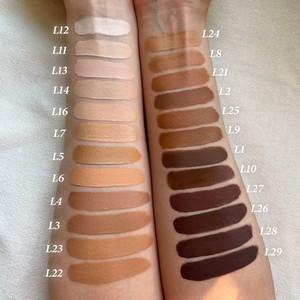
Explore our export-ready private label formulations tailored for cold-climate stability, high pigment payoff, and long-wearing comfort across Eurasian retail networks.
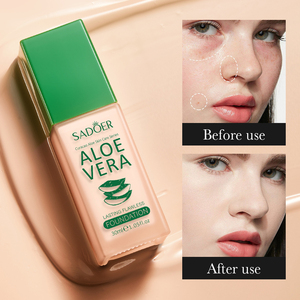
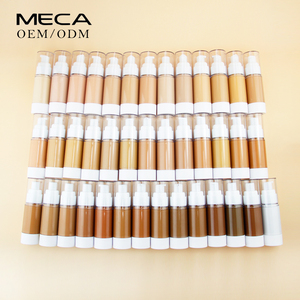
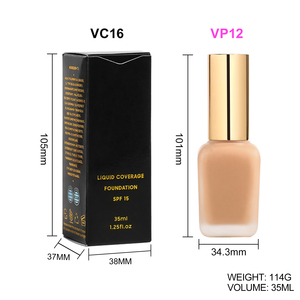
Semantic analysis of Russian cosmetic purchasing behaviors reveals a decisive shift toward whipped, non-drying, high-chroma lip cosmetics capable of withstanding extreme environmental stressors.
Traditional liquid lipsticks dry out and crack in sub-zero winter air. Russian consumers actively seek whipped mousse textures enriched with emollients (Squalane, Shea Butter, Vitamin E) that form a protective barrier against cold wind burns while preserving a velvety finish.
Search intent in Moscow, St. Petersburg, and Novosibirsk shows high search volume for "бархатный мусс для губ" (velvet lip mousse) and "матовый тинт" (matte tint). Buyers prefer weightless air-whipped silicone elastomers over heavy liquid mattes.
With tightening customs regulations across the Eurasian Economic Union (EAEU), Russian B2B importers prioritize contract manufacturers who provide complete technical dossiers (SDS, INCI breakdowns, heavy metal assays) to streamline EAC Declaration filings.
Why do standard lip mousses fail in Northern and Eastern European markets? Most OEM factories use volatile cyclomethicones that evaporate rapidly, leaving un-emulsified pigments that freeze and separate at ambient temperatures below -15°C. At COLORCOS, our specialized R&D team incorporates a Tri-Phasic Silicone-Elastomer Cross-Polymer Matrix coupled with high-melting-point microcrystalline botanical waxes. This prevents syneresis (oil separation), guarantees smooth application on dry lips, and maintains viscosity stability during trans-Siberian freight routes.
Rigorous chemical, physical, and packaging specifications designed for enterprise cosmetic brands exporting into Russian retail chains.
| Formulation Parameter | COLORCOS Standard Benchmark | Russia Market Localization Option | Compliance / Test Standard |
|---|---|---|---|
| Texture & Viscosity | Whipped Mousse / Air-Puffed Cream (35,000–50,000 cPs) | High-Density Velvet Mousse / Soft Focus Tint | Viscometer Rheology Testing |
| Finish Payoff | Semi-Matte / Soft Velvet Matte | Non-Drying Blurring Matte with Hydrating Core | Sensory Panel Evaluation |
| Thermal Stability Range | -20°C to +45°C (Standard 3-Cycle) | -35°C to +50°C (Extended Freeze-Thaw) | ISO 22716 Stability Chamber |
| Shade Customization | Standard Pantones & Spectrophotometer Match | Cool Dusty Rose, Berry Plum, Cold Nude, Deep Mauve | CIELAB Color Difference (ΔE < 0.8) |
| Active Ingredients | Vitamin E Acetate, Hyaluronic Acid Spheres | Rosehip Oil, Squalane, Arctic Berry Extract | Dermatological Safety Certification |
| Regulatory Dossier | FDA, GMP, GMPC, ISO 22716, Halal | TR CU 009/2011 EAC Declaration Package | Rospotrebnadzor Dossier Ready |
Understanding real-world usage patterns allows private label brands to optimize packaging, formulation weight, and marketing narratives for maximum conversion.
Russian women frequently transition from sub-zero outdoor weather to intensely dry heated interiors. Standard long-wear lipsticks tighten and flake under these dry conditions. Our lip mousse uses self-assembling lipid films that trap moisture inside the stratum corneum, preventing peeling during abrupt temperature shifts.
Online beauty sales via platforms like Wildberries, Ozon, and Yandex Market dominate Russian retail. Compact, leak-proof, frost-resistant packaging (thick-walled frosted acrylic tubes with silicone wiper seals) ensures zero transit leakage when shipped across multiple Russian climate zones.
Driven by minimalist makeup trends in European Russia, consumers favor lip mousses that double as cream blushes. Our OEM formulations feature non-comedogenic ester oils that blend seamlessly over liquid foundation or bare skin without disrupting underlying base makeup.
Founded in 1998, COLORCOS Thailand operates a vertically integrated, state-of-the-art manufacturing infrastructure. We combine advanced Japanese formulation chemistry, European quality control standards, and highly competitive Southeast Asian production efficiency.
Our manufacturing plant operates under strict pharmaceutical-grade cleanroom protocols (Class 100,000 cleanrooms), fully certified by international governing bodies:
Direct answers to common technical, logistics, and regulatory questions asked by cosmetic brand owners and importers.
Our standard MOQ is 3,000 to 5,000 units per shade for custom formulated colors and custom component printing. For stock formula bases with standard packaging, lower MOQs (starting at 1,000 units) can be accommodated to support initial market testing in Russia.
We execute rigorous 5-cycle freeze-thaw stability testing (-35°C to +50°C) over 28 days in environmental simulation chambers. We utilize advanced thixotropic gelling agents and hydrophobically treated pigments that prevent syneresis, settling, or texture alteration during long freight transport through Siberian transit routes.
Yes. We provide complete technical dossiers required by Russian certification agencies (Rospotrebnadzor). This includes complete INCI chemical breakdowns, Heavy Metal Test Reports (Lead, Arsenic, Mercury, Cadmium), Microbiological Analysis, Toxicological Safety Assessments, and Certificate of Free Sale (CFS).
We offer an extensive range of packaging components optimized for lip mousse formulas, including frosted acrylic tubes, soft-touch matte containers, custom molded caps, and precision doe-foot applicators (slanted, tear-drop, or reservoir tips). All packaging undergoes leak-pressure testing to withstand high-altitude air cargo and temperature changes.
Absolutely. Our R&D laboratory utilizes advanced Datacolor spectrophotometers for quantitative color matching. You can send us a physical benchmark sample or target Pantone code, and our colorists will achieve a match with a Delta E (ΔE) color variance below 0.8.
Sample development and shade matching take 7 to 10 business days. Upon sample sign-off and packaging confirmation, mass production requires 30 to 35 days. Shipping lead times to major Russian entry points (e.g., Vladivostok port, Moscow railway hubs, or St. Petersburg) depend on the chosen freight method (Sea-Rail multimodal or Express Air).